
Sleep Apnea Treatment Lewisville
Dental Care for Whole Body Health
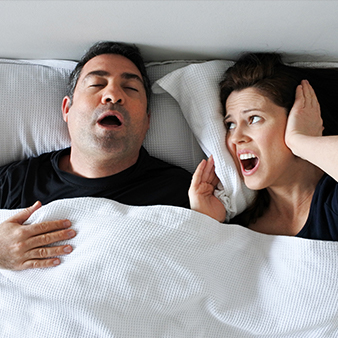
Are you tired of feeling tired? If so, then contacting Creekview Family Dentistry might be the solution you’ve been looking for! Thanks to our team’s special training and experience, in addition to taking care of the teeth, we can also assess our patients’ airways and help them overcome general health problems like snoring and sleep apnea. Using a custom-made oral appliance for sleep apnea treatment in Lewisville, we can ensure a patient breathes normally while they sleep so they (as well as anyone near them) can get the quality rest they need every night.
Why Choose Creekview Family Dentistry for Sleep Apnea Treatment?
- Sleep Appliances Custom-Made for Each Patient
- Able to Stop Even the Most Severe Snoring
- Viable Alternative to CPAP Therapy
What is Sleep Apnea?
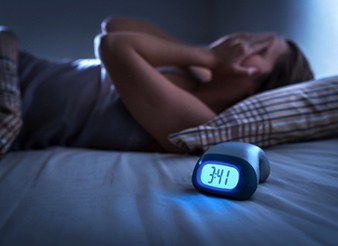
Sleep apnea is a sleeping disorder where breathing stops and starts repeatedly throughout the night. The most common form is obstructive sleep apnea, which is where the muscles in the back of the throat relax while you’re asleep and end up partially or fully blocking the airway. This lowers the oxygen levels in your blood, which can negatively impact your vital organs.
If breathing stops, your brain will wake you up briefly so that breathing can resume; most of the time this happens quickly enough that you won’t remember it later. These awakenings can occur 5 to 30 times an hour each night, preventing you from getting the deep sleep your body needs to maintain good health.
Learn More About Sleep Apnea Therapy
Signs and Symptoms of Sleep Apnea
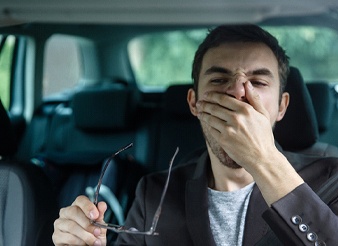
Naturally, because sleep apnea occurs while you’re asleep, you might not realize it’s happening right away. However, other people might notice the loud chronic snoring that usually accompanies the disorder. Other symptoms include:
- Occasionally waking up gasping for breath
- Headaches and/or a dry throat when you wake up
- Excessive daytime drowsiness
- Cognitive issues such as memory loss and difficulty concentrating
- Mood swings, irritability or depression
Note that not all of these symptoms will necessarily be present at once.
Over the long term, sleep apnea will increase your risk of heart attack, stroke and other cardiovascular issues. Sleep deprivation will also generally increase your risk of accidents. For your health and safety, it’s best to have sleep apnea diagnosed and treated as soon as possible.
Learn More about Sleep Studies
How We Treat Snoring & Sleep Apnea
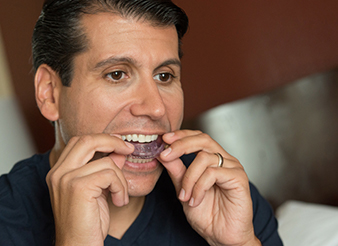
While in the past noisy, cumbersome CPAP machines were considered the best solution for sleep apnea treatment in Lewisville, more and more dentists are using more comfortable and convenient oral appliances instead. Our Dream TAP appliances are small devices that fit over a patient’s teeth and slightly shift their lower jaw forward. This way, when someone lays down, their airway stays fully open, preventing the cessations in breathing associated with sleep apnea. Our oral appliances are custom-made for each patient to guarantee a comfortable fit, and they can serve as a great alternative for patients who are either CPAP intolerant or just hate using it.
Sleep Apnea (Obstructive Sleep Apnea) FAQs
Why Should I See a Dentist for Sleep Apnea Treatment?
While the connection may not seem entirely clear at first, the truth is that your dentist is an expert in the upper respiratory area.
With obstructive sleep apnea, tissues from the mouth and neck can prevent healthy breathing, and your dentist can help reposition your lower jaw to keep these tissues out of your airway.
Plus, because you already meet with your dentist regularly, you have a built-in appointment where you can be examined, and your condition can be closely monitored.
Does Everyone Who Snores Have Sleep Apnea?
No, not everyone who snores has sleep apnea, and not everyone who has sleep apnea snores. The best way to determine whether you have sleep apnea is to schedule a sleep study to diagnose the condition.
Approximately 20 million Americans (or about 20% of the adult population) has some form of sleep apnea.
How Long Are Apnea Events or Episodes?
Most apnea events last ten seconds or longer but can continue for up to two minutes each time. They can also occur five to 30 times each hour of sleep!
A sleep test can reveal how advanced your case is, how often your apnea episodes occur, and what type of sleep apnea you have.
A general rule of thumb is 0 to 15 events per hour is considered mild, while 30 or more is considered severe.
Can I Diagnose Sleep Apnea on My Own?
Unfortunately, you cannot diagnose yourself with sleep apnea. This is because having symptoms doesn’t necessarily mean you have sleep apnea.
Furthermore, it is also important to determine which type of sleep apnea you have prior to treatment.
Although devices like Apple Watches or Fitbits can help, they cannot comprehensively test for sleep apnea. Only a sleep test from a qualified doctor or dentist can truly diagnose sleep apnea and customize an appropriate treatment plan.
I Need a Checkup & Cleaning I Have a Cavity or Broken Tooth I am Missing 1 or More Teeth I Want to Improve My Smile I Would like a Straighter Smile I am Anxious & Afraid I am in Pain/Had an Accident I am Worried About Bleeding Gums I am Experiencing Head, Neck, or Jaw Pain I Want to Learn about Sleep Apnea View Our Services